
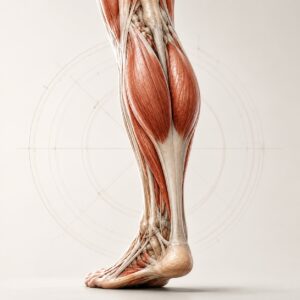
 Few things can wake a person more abruptly than a sudden cramp in the calf during the night.
One moment you are asleep, the next you are sitting upright in bed with a painfully tight calf that has seized without warning. For some people, it happens only occasionally. For others, night-time leg cramps become a regular and frustrating disruption to sleep – sometimes night after night.
They are extremely common, particularly with ageing, yet the reasons behind them are not always straightforward.
What Are Night-Time Leg Cramps?
Night-time leg cramps are sudden, involuntary muscle contractions that most commonly affect the calf, although the feet and hamstrings can also be involved.
They are often intensely painful, may last from seconds to several minutes, and can leave lingering tenderness or tightness well into the following day.
While dehydration is often blamed, the picture is usually more complex than simply not drinking enough water.
In many cases, night cramps appear to involve altered neuromuscular excitability – in other words, the nerves controlling muscle contraction may become more prone to firing when they should be quiet. During sleep, movement becomes minimal, the calf often rests in a shortened position, and muscles that have carried the load of the day finally come to rest – conditions that may make an already irritable muscle more prone to cramping.
Nutrition And Muscle Physiology
From a nutritional perspective, night cramps are worth viewing through the lens of muscle physiology.
Muscles do not contract and relax in isolation – they depend on healthy nerve signalling, adequate hydration, sufficient cellular energy production, good circulation, and a steady supply of nutrients that support normal muscle contraction and relaxation.
This includes minerals such as magnesium, calcium, sodium and potassium, along with adequate protein intake and overall nutritional adequacy.
That does not mean everyone with night cramps has a deficiency. But when cramps become frequent, it is reasonable to consider whether nutrition is adequately supporting healthy muscle function.
Magnesium – Important, But Not Always The Answer
Magnesium is often the first nutrient people reach for, and for good reason. It plays important roles in muscle relaxation, nerve signalling and electrolyte balance.
Physiologically, magnesium matters.
However, when magnesium supplementation has been studied specifically for idiopathic nocturnal leg cramps, the overall evidence has been mixed, with large reviews showing little consistent benefit for most adults.
That does not make magnesium irrelevant, particularly where intake is low, requirements are increased, digestive absorption is compromised, or magnesium status is suboptimal. In those circumstances, correcting insufficiency may still be worthwhile – it is simply not the universal fix it is often portrayed to be.
Calcium, Sodium And Potassium Matter Too
Calcium is central to muscle contraction. Sodium and potassium help generate the electrical signals that allow muscles and nerves to function normally.
Disturbances in these minerals – particularly in people who sweat heavily, exercise intensely, use certain medications, restrict food intake, or lose fluids through illness – may increase susceptibility to cramping. In others, mineral status may be entirely adequate, which is why individual context matters.
Protein And Muscle Health
Protein is not often discussed in relation to cramps, but healthy muscle tissue depends on adequate protein intake.
As people age, appetite often declines, meals become smaller, and protein intake may quietly fall below what muscles need for repair, recovery and maintenance.
Poorer muscle quality does not directly cause cramps, but tired, undernourished muscle may be less resilient and more prone to dysfunction.
This is one reason nutrition deserves a place in the conversation.
Vitamin K2 – As A Nutrient Of Interest
One of the more intriguing recent developments has been vitamin K2.
A 2024 randomised clinical trial using MK-7 at 180 mcg daily in older adults found significant reductions in the frequency, severity and duration of nocturnal leg cramps over eight weeks.
These early findings are interesting, though more research will help clarify how meaningful this may prove to be in practice.
Looking Deeper
Persistent night cramps may sometimes point to something worth investigating.
Medication effects, thyroid dysfunction, diabetes-related nerve changes, poor circulation, reduced mobility, peripheral neuropathy, and metabolic changes or nutritional inadequacy may all be relevant.
This is where individual assessment becomes important, because the drivers of night cramps can differ meaningfully from person to person.
The Bottom Line
Night-time calf cramps are common, painful and often multifactorial.
Magnesium may help some people, particularly where intake or status is genuinely low, but it is not a guaranteed fix. Hydration and electrolytes matter most when there is a clear reason for fluid or mineral loss. Vitamin K2 is an interesting emerging area, though the research is still in its early stages. And for many people, the bigger picture – sound nutritional foundations, adequate protein intake, healthy muscle function and addressing underlying contributors – may matter most.
There is rarely a single magic answer.
But there is often a reason worth exploring.
If night cramps are waking you regularly, it may be worth looking beyond the usual advice to “drink more water” or “take magnesium.” Frequent cramps can have several possible contributors, and understanding the pattern is often the first step toward a more helpful response.
For personalised guidance around nutrition, supplements and possible underlying factors, consultations can be booked at www.viveclinic.com.au.
Article written by
Peter Christinson
Certified Practicing Nutritionist
Vive Health – Retail and Clinic Manager