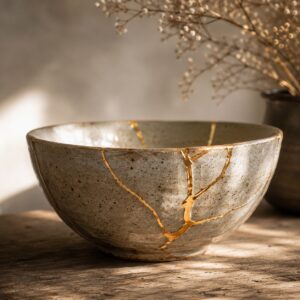
The Japanese art of kintsugi involves repairing broken pottery with gold. Rather than disguising the cracks, the repairs become part of the piece itself. Something valuable has shown vulnerability, and the response is not to ignore it, but to treat it with care.
Osteopenia deserves a similarly thoughtful response. It does not mean the bones are broken, and it does not mean a fracture is inevitable. But it does tell us that something important deserves closer attention. Its significance depends on the person, their clinical context and their individual risk of fracture.
Many people feel concerned when they first see the word osteopenia on a bone density report. For some, it immediately raises fears about osteoporosis and fractures. Others assume it is simply a normal part of getting older that can be safely ignored.
The reality is that neither response is particularly helpful.
Osteopenia is not osteoporosis, but nor is it a finding that should be ignored. It is one piece of information that needs to be interpreted carefully alongside the person’s broader health picture.
What Does Osteopenia Actually Mean?
Osteopenia simply means bone density is lower than average, but not low enough to meet the criteria for osteoporosis.
It is most commonly identified during a dedicated bone mineral density assessment performed using DEXA technology. This is different from a DEXA body composition scan, which may use similar technology but is not designed to provide the same information about bone density and fracture risk.
In simple terms, osteopenia sits between normal bone density and osteoporosis.
However, this is where many people make the mistake of assuming the classification alone tells them everything they need to know.
It does not.
Osteopenia Exists On A Spectrum
One of the most important things to understand is that osteopenia is not a single fixed state.
Someone whose bone density is only slightly below the normal range may be described as osteopenic, while another person’s bone density may sit just above the threshold for osteoporosis. Although both fall within the osteopenic range, their fracture risk, clinical significance and management may be very different.
This is one reason why the result itself is only the starting point. The degree of bone loss, the location of the measurement and the individual’s broader risk profile all contribute to the interpretation of the result.
Why Context Matters
This is where interpretation becomes important.
A bone density report can tell us that osteopenia is present. It cannot tell us, on its own, what that means for a particular person.
A practitioner may also consider age, sex, menopausal status, previous fractures, family history, medications, smoking history, alcohol intake, exercise habits, muscle strength, balance and a range of other factors that influence fracture risk.
Two people with identical DEXA results may not have identical risk. Likewise, two people with the same osteopenia classification may require very different advice.
This is why context matters. The report provides information, but meaningful interpretation requires an understanding of the individual sitting behind the result.
Why The Result Still Matters
Although osteopenia should not be viewed as a reason for panic, it does deserve attention.
Bone loss is typically a gradual process that develops over many years. Most people do not wake up one morning with osteoporosis. Changes in bone density often occur quietly and without symptoms, which is one reason osteoporosis is frequently described as a silent condition.
For many people, an osteopenia result provides an opportunity to identify and address factors that may be contributing to bone loss before further deterioration occurs.
In that sense, the result can be viewed as useful information rather than bad news.
What Factors Influence Bone Health?
Bone density is important, but healthy bones depend on much more than mineral content alone.
Adequate protein intake provides the building blocks for the collagen framework that gives bone flexibility and resilience. Calcium, phosphorus and other minerals contribute to strength and structure. Vitamin D plays an important role in calcium absorption, while vitamin K2 contributes to calcium handling and bone mineralisation.
Exercise is equally important. Bones respond to mechanical loading, and activities such as resistance training and weight-bearing exercise help stimulate the bone-building processes that support the maintenance of bone mineral density over time. Maintaining muscle strength and balance may also help reduce the risk of falls, which are responsible for many fractures.
Hormonal health, medication use, digestive health, smoking, alcohol intake and a range of other factors can also influence bone metabolism over time.
This complexity is another reason why personalised assessment is valuable.
The Bigger Opportunity
Perhaps the most useful way to think about osteopenia is as an invitation to look deeper.
Why is bone density lower than expected? Are there nutritional factors that deserve attention? Is protein intake adequate? Is resistance training being performed regularly? Could hormonal, digestive or lifestyle factors be influencing bone health?
The finding itself is important, but the answers to these questions are often where the greatest value lies. Understanding why osteopenia is present is often more useful than simply knowing that it is there.
The Bottom Line
Osteopenia is not the same as osteoporosis, and it does not automatically mean that a fracture will occur.
What it does mean is that bone density is lower than ideal and that bone health deserves thoughtful attention.
Most importantly, osteopenia is not one-size-fits-all. It exists on a spectrum, and its significance depends on the individual. The classification is only the beginning of the conversation. Understanding why it is present and what can be done about it is where personalised care becomes most valuable.
If you have been told you have osteopenia, or you are concerned about your bone density, it can be helpful to work with a practitioner who understands the nutritional and lifestyle factors that influence skeletal health over time.
Article written by
Peter Christinson
Certified Practicing Nutritionist
Vive Health – Retail and Clinic Manager
Peter Christinson is a Certified Practicing Nutritionist with a clinical interest in bone health, healthy ageing and personalised nutrition care.